The Sheep That Stopped Running
Hey there,
I ran across an old story this week so I thought I would share. A woman visiting in Switzerland walked into a sheepfold on one of her daily walks. The shepherd was sitting with his flock. Off to the side, on a pile of straw, one sheep was lying there with a broken leg.
She felt for it. Anybody would. She asked him what happened.
The shepherd didn't dodge the question. "I broke it myself," he said.
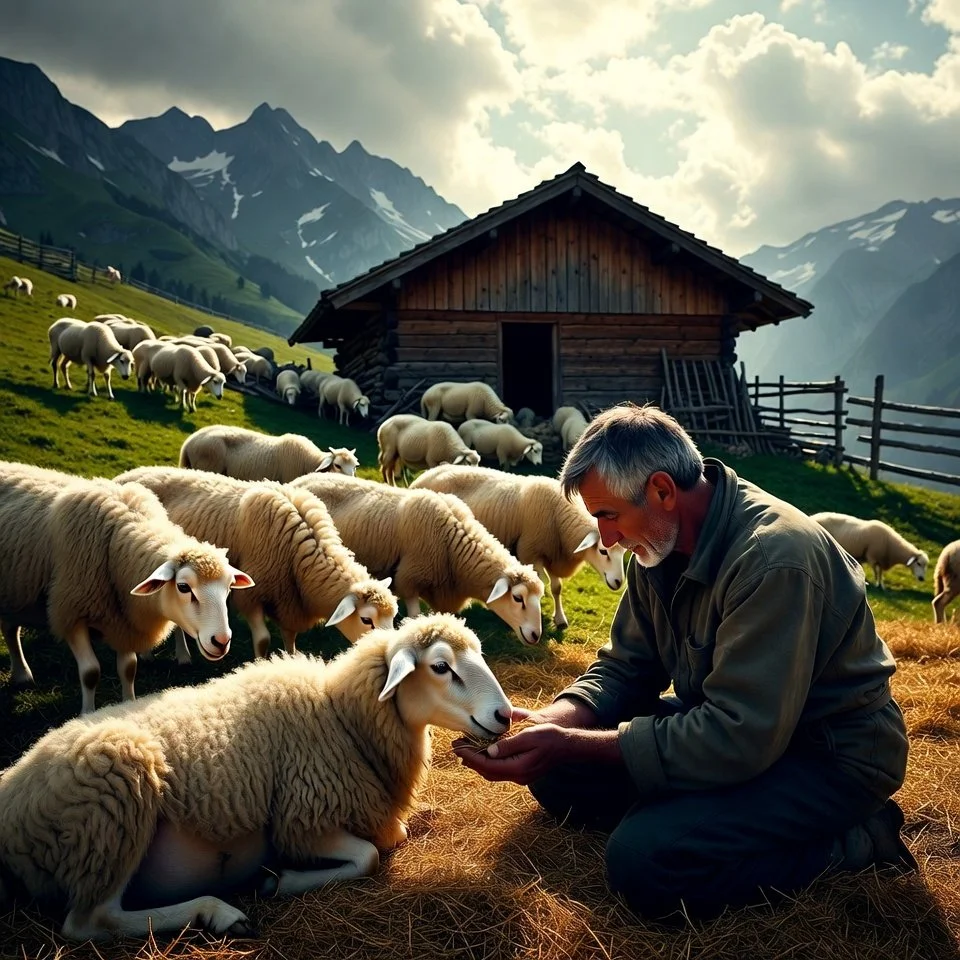
Then he quickly explained. Of all the sheep in his flock, this one was the most wayward. It wouldn't come when he called. It wouldn't stay with the others when he led. More than once he'd found it nosing the edge of a cliff—and not just putting itself in danger. It was pulling other sheep with it.
He'd tried his voice. He'd tried staying close. The sheep kept choosing the drop-off. So, he did something that looked, from the path, like cruelty. He broke the leg that kept running toward the edge. The next day he came with food and the sheep tried to bite him. He left it a couple of days. When he came back, it took the food. It licked his hand. And when that leg healed, he said, this wouldn't be the rebel of the flock anymore. It would be the one that heard his voice first and stayed the closest.
"It will have learned obedience through its sufferings."
I don't tell that story because I think God is looking for a reason to hurt us. I tell it because I think a lot of us know what it is to wander. And a lot of us know what it is to end up in a place we didn't choose, wondering if the Lord is against us when He might be the One keeping us from the cliff.
We wander more than we like to admit
Isaiah didn't leave any of us out of that picture. "All we like sheep have gone astray; we have turned—every one—to his own way" (Isaiah 53:6). That isn't only the big, public rebellions. That's the quiet ones too. The habit we keep calling a “personality.” The prayer life that got crowded out. The Sunday faith that never quite makes it to Monday.
A wayward sheep rarely sprints off the cliff on day one. It just stops listening. Then it stops staying close. Then one morning the drop-off doesn't look that far.
Jesus said it the other way around: "My sheep hear My voice, and I know them, and they follow Me" (John 10:27). That's the simple Christian life, right? Not heroics. Following. And when we stop following, He doesn't shrug and pick a different flock. "I am the good shepherd. The good shepherd lays down His life for the sheep" (John 10:11). He doesn't come after us because He's done with us. He comes after us because He isn't.
Hard seasons aren't always punishment—but they aren't wasted either
Let's say the honest thing here. Not every wound is God breaking a leg. Some suffering is just life in a fallen world. Some of it is other people's sin. We're not doing anybody a favor if we look at a friend's pain and announce that they must've been wandering.
But Scripture also won't let us pretend God never interrupts us. "The Lord disciplines the one He loves" (Hebrews 12:6). That's fatherhood, not cruelty. David said it from the other side: "Before I was afflicted I went astray, but now I keep Your word… It is good for me that I was afflicted, that I might learn Your statutes" (Psalm 119:67, 71).
That's a hard sentence to pray while it still hurts. It's a true one after you've learned to stay.
The point was never the limp
Here's the part of that old illustration we can't miss. The shepherd didn't leave that sheep on the straw and walk back to the easy ones. He came with food. He stayed close enough to be bitten. He came back again after the biting. And when the sheep finally took what he offered, it didn't just survive. It learned his hand.
That's Psalm 23, and not the greeting-card version. "The Lord is my shepherd; I shall not want." He makes us lie down. He leads. He restores. And then the line we skip when life is smooth: "Even though I walk through the valley of the shadow of death, I will fear no evil, for You are with me; Your rod and Your staff, they comfort me" (Psalm 23:1, 4). The rod and staff aren't souvenirs. They're how a shepherd keeps a sheep from dying on a ledge—and how he keeps it near once it can't run.
Peter says it without a farm in sight: "Humble yourselves, therefore, under the mighty hand of God so that at the proper time He may exalt you, casting all your anxieties on Him, because He cares for you" (1 Peter 5:6–7). Mighty hand. That's the part we resist. He cares for you. That's the part we forget while we're busy resenting the hand.
If you're on the straw this week
Don't waste the season arguing with the Shepherd about methods. Ask a better question: What is He trying to teach me to hear?
Maybe He's interrupting a pattern you kept calling freedom. Maybe He's protecting people you were about to take over the edge with you. Maybe you don't get a tidy explanation, and the assignment is still the same—stay, take the food, stop biting the hand that's keeping you alive.
That probably looks simpler than we want it to. Open the Bible when you don't feel like it. Tell the truth to a brother or sister instead of performing “it’s fine.” Confess the wandering before it becomes a cliff. Pray one honest prayer: "I don't like this. I know You're still good. Teach me to stay."
And if the wandering has already cost you something, don't wait for the limp to disappear before you come home. The shepherd in Luke 15 leaves the ninety-nine, finds the one, and carries it back on his shoulders, rejoicing (Luke 15:4–5). That's the heart you're dealing with. Not a man on a hillside who enjoys breaking things. A Savior who would rather shoulder you than watch you fall.
"And after you have suffered a little while, the God of all grace, who has called you to His eternal glory in Christ, will Himself restore, confirm, strengthen, and establish you" (1 Peter 5:10). Restore. Confirm. Strengthen. Establish. That's not a God who snapped something and walked off. That's a God who stays through the healing.
Some of us are still in the biting stage. Some of us can already feel the strange gift in a season we would never have chosen: we can hear Him better than we could when both legs worked and we didn't think we needed Him.
Don't despise that. And don't tell yourself the Shepherd is against you because He wouldn't let you keep running toward the edge. He still comes with food. He still holds out His hand. And the voice that stopped you is the same voice that will lead you home.
I'm praying we stay close enough to hear Him this week.
~ Charlie