Hey there,
A guy I know has a few apple trees behind his house. One afternoon his neighbor was over and mentioned he’d tried one of the apples that had dropped near the fence line. “Pretty sour,” he said. “I didn’t think you grew the good kind.”
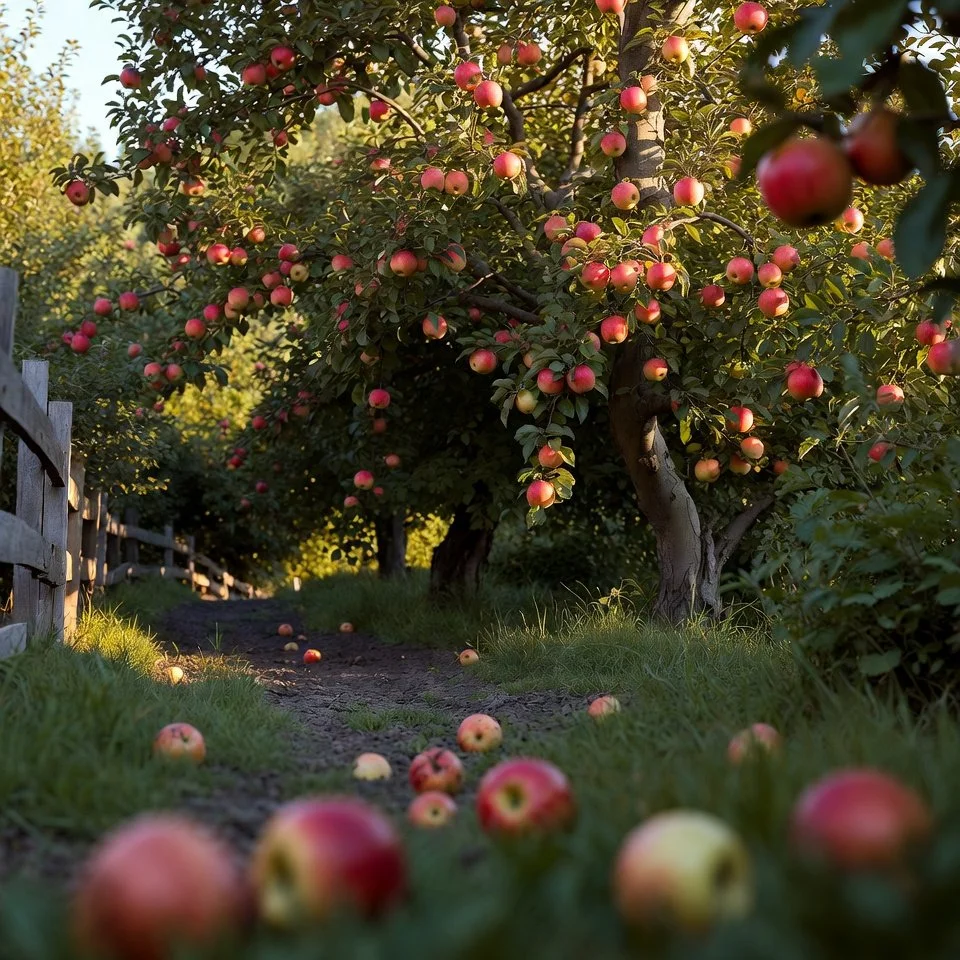
The owner just shrugged. “Those are the ones that fall first. Birds get to them, they sit in the sun too long. Come on back to the middle of the trees.” They walked a little farther in and picked a couple that were still on the branch. Completely different—sweet, crisp, nothing like the ones on the ground.
Sometimes we only taste what’s easiest to reach or what’s already fallen, and we decide the whole thing isn’t worth it. We never walk far enough in to find out what’s actually there.
I’ve thought about that with the Christian life. There are seasons and moments that can leave a sour taste. A hard conversation. A disappointment with people. The slow work of trying to love someone when it doesn’t feel easy. If that’s all we sample, it’s easy to conclude that following Jesus—or staying connected to his people—just isn’t as good as we hoped. We stay near the fence line.
But Scripture keeps inviting us farther in. Psalm 34:8 says, “Taste and see that the Lord is good.” The goodness isn’t usually found in the easiest or most convenient place. It’s found the closer we stay to him. Paul talks about the fruit of the Spirit in Galatians 5—love, joy, peace, patience, kindness, and the rest. That fruit doesn’t grow on the outer, it grows where we’re actually walking with the Lord and letting his Spirit shape how we treat one another.
Forgiveness is one of those places. On the surface it can feel costly. It asks us to release something we’d rather hold. Ephesians 4:32 and Colossians 3:13 both tie it to the way God has already treated us in Christ. The command isn’t “forgive because they deserve it.” It’s “forgive as the Lord forgave you.” That doesn’t make the hurt disappear, and it doesn’t always restore the relationship the way we want. But it does keep us from living on the sour fruit of bitterness. It moves us toward the middle, where there’s more freedom and more room for the Spirit’s fruit to grow.
None of this means we ignore problems or pretend everything is fine. It just means we don’t let the fallen apples near the fence become our whole picture. We keep walking farther in—toward the Lord, toward honest love, toward the willingness to forgive even when it’s hard. That’s where the taste changes.
I know that’s easier said than done. Some of you have seen things among God’s people that didn’t sit right. It left a sour taste and made you wonder whether any of this is as real or as good as you once thought. That’s an honest place to be. What falls near the fence is real, and you don’t have to pretend otherwise.
But the orchard is bigger than those few apples. The same Lord who calls us to keep walking with him is still at work farther in. He’s still growing something sweeter in people who stay close to him. You don’t have to ignore what you’ve seen. You also don’t have to let it become the only thing you taste. There’s still good fruit further in—peace that doesn’t depend on everyone else getting it right, and a kind of joy and love that can keep going even when people fall short.
So, if the edges have left you hesitant, you’re not alone. A lot of us have stood there. The invitation is still the same: come a little farther in. Taste again. The Lord is good, and the nearer we stay to him, the more that goodness has room to show up—even among imperfect people.
~ Charlie