Hey there,
You know that garage or shop a lot of us end up building or claiming? The one that starts out as “just a place for my tools” or “somewhere I can work on projects without getting in the way”? I remember when I first got serious about mine. It was supposed to be practical—space to tinker, fix things, maybe keep a few hobbies going without taking over the rest of the house. Nothing fancy. Just a spot that made sense for what I thought I needed.
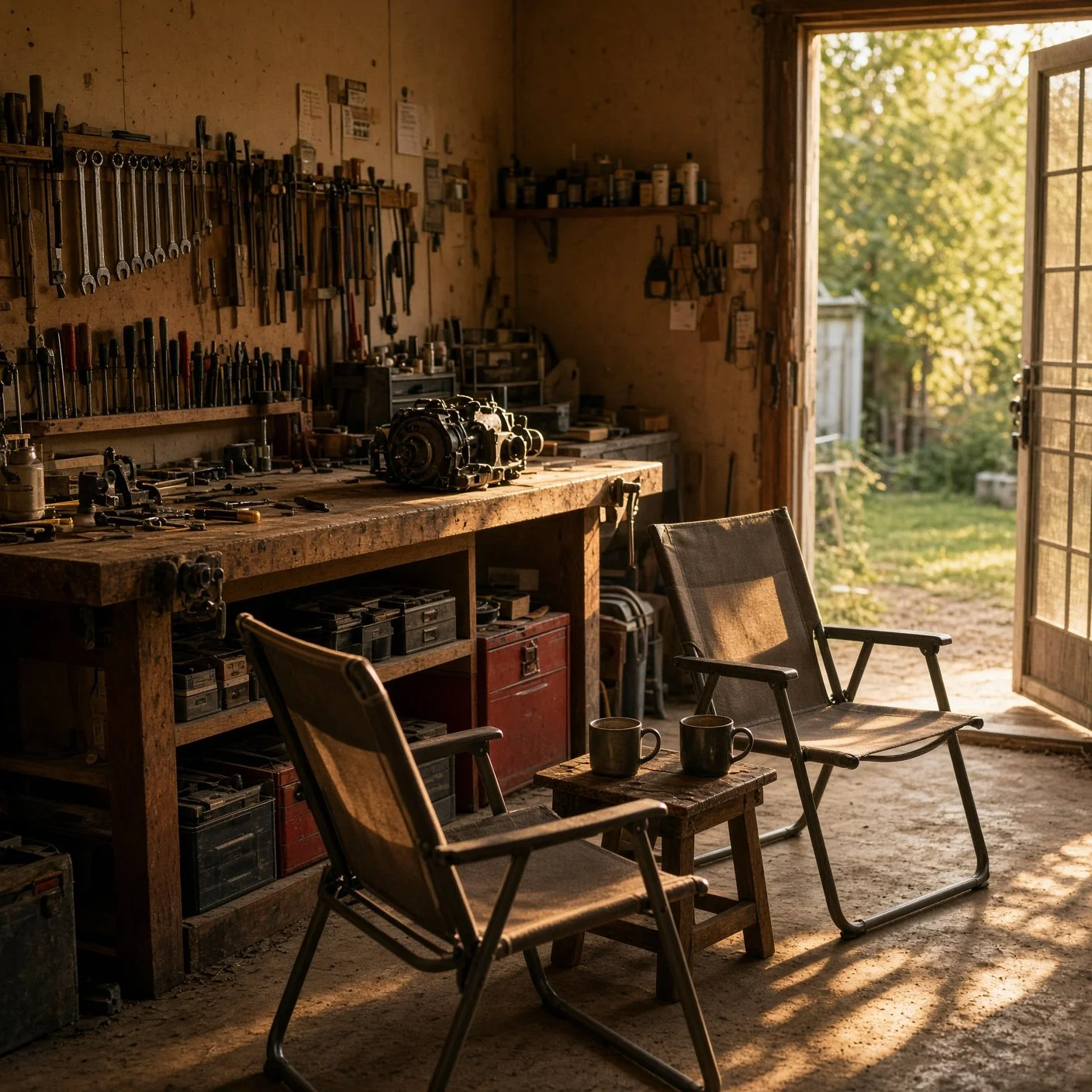
Now, I can already see it turning into something else. The kids hang out there with me sometimes. Neighbors will stop by. Conversations happen while something’s being fixed or built. It’s not a big ministry plan. It’s just life. But I have a feeling that one day, when the grandkids are looking back at old stories, they might talk about that shop as more than a place Grandad worked on projects. They might remember it as the spot where people felt welcome, where questions got asked, or where someone first heard something that stuck with them about Jesus. I’ve used it for the tools and the projects. God might be using it for something quieter and longer-lasting.
We do this a lot, don’t we? We make decisions that feel straightforward at the time. We move for a job. We start a side project. We fix up a space because it makes practical sense. And in the moment, it feels like we’re the ones steering. We’re being responsible. We’re planning. We’re doing what seems smart. But then life unfolds, and when we (or the people who come after us) look back, we start to notice patterns we didn’t put there on purpose. Little things that lined up. Opportunities that opened. People who crossed our path. It’s easy to call it coincidence when you’re in the middle of it. It’s harder to ignore when you see the bigger picture.
That’s one of the things that stood out when we watched an Expedition Bible video on Caesarea in our Teen/Young Adult class this past Sunday. (If you haven’t seen it, it’s worth the time—Caesarea: The City that Changed the World!.) Herod the Great poured a ton of money and effort into building this massive artificial harbor and a whole Roman-style city on the Mediterranean coast. He wanted a port that would make it easy to bring Rome closer—trade, military power, the whole imperial package. He named it after Caesar. He built temples that honored the emperor. From his perspective, he was being smart and ambitious. He was securing his place and strengthening the connection to Rome.
What he didn’t know—and what we can see looking back—is that God was going to use that same harbor as one of the main places the gospel moved outward. Philip the evangelist ends up settling there. Peter preaches to Cornelius and his household in Caesarea, and the Holy Spirit comes on those Gentiles in a big, public way. Paul gets sent there, spends time imprisoned in Herod’s own palace, shares the good news with Roman officials, and eventually sails from that port toward Rome. The city Herod built to pull Roman influence in became a pump that helped push the message of Jesus out.
Herod thought he knew exactly what he was building and why. Looking back, we can see God’s hand in the timing and the way it all lined up for the spread of the gospel. It doesn’t mean Herod was secretly a believer or that every decision he made was holy. It means God is sovereign enough to work through ordinary (and even self-serving) human choices to accomplish His purposes. Proverbs 16:9 puts it simply: “The heart of man plans his way, but the Lord establishes his steps.” We make our plans. We build our shops and make our moves. And the Lord is still the one directing the outcome in ways we often don’t see until later.
So, here’s the encouragement and the challenge for us. Keep being faithful in the ordinary things. Build the garage. Take the job. Start the project. Host the people who show up. Do it with integrity and with an openness, because you never fully know what God might do with it. And when you’re tempted to feel like everything depends on you getting the plan exactly right, remember Caesarea. Remember the harbor that was built for one reason and used for another. The people who come after us—our kids, our grandkids, the folks we influence—might look back and see God’s hand more clearly than we do right now. Our job is to trust Him with the timing and to stay faithful in the path He has set before us.
Hope you have a great week!
~ Charlie