Hey there,
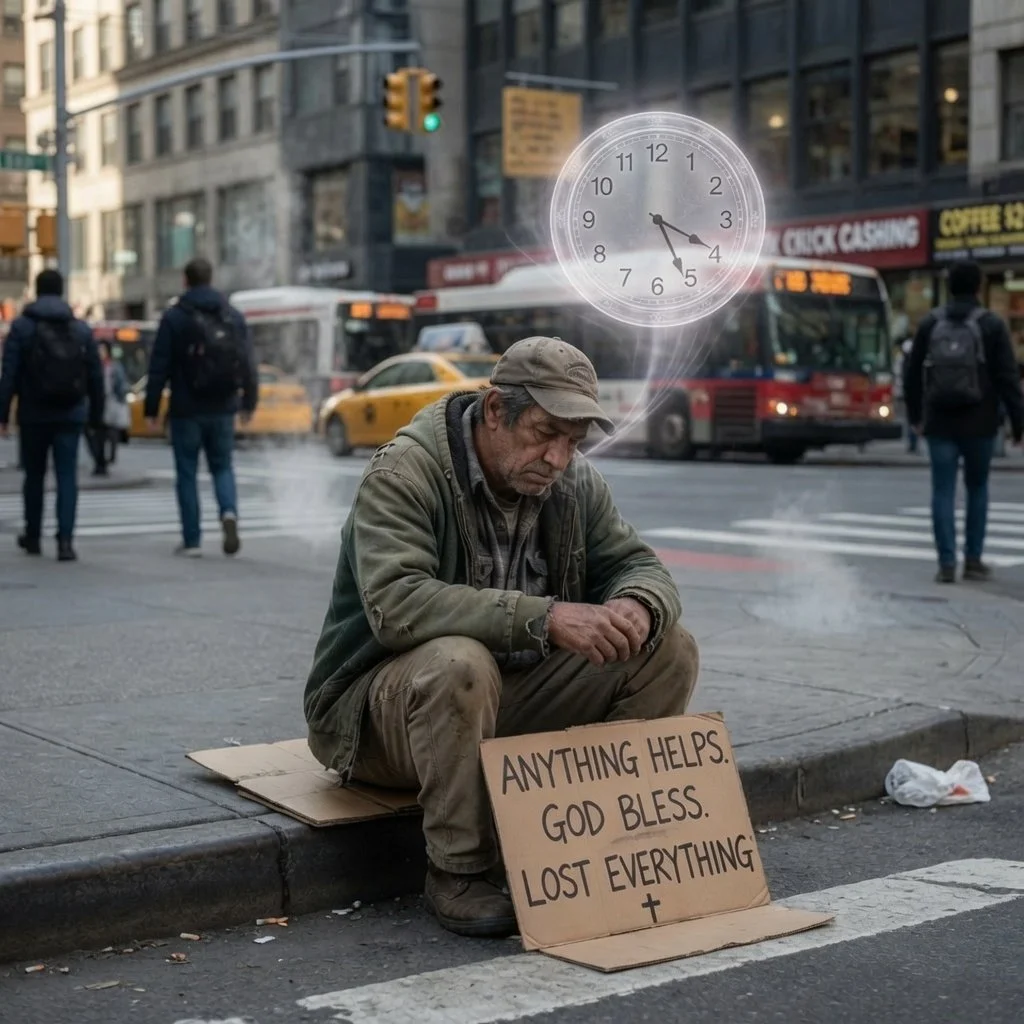
Imagine walking through your day—grocery store, coffee shop, work meeting, or neighborhood street—and every person you pass has a small, visible clock floating above their head. Tick… tick… tick… You can’t see the numbers, but you know they’re counting down. Closer to zero. Closer to eternity. Would that change how you see them? Would it change what you say… or don’t say?
Background Scripture:
I think we often overlook the time element because life often feels routine, but that’s not what we learn from scripture. “Teach us to number our days, that we may gain a heart of wisdom” (Psalm 90:12). If our days are numbered, then so are theirs. Every conversation could be one of their last before eternity.
Recently, in our Sunday morning class, we’ve been studying Luke 15. Here Jesus tells three rapid-fire parables in response to religious leaders grumbling that He welcomed and ate with sinners. In each story, something valuable has been lost—and the owner drops everything to search until it’s found. Then comes the celebration.
The shepherd leaves the 99 sheep to find the one.
The woman turns her house upside down until she finds her lost silver coin.
The father watches the road and runs to his rebellious son the moment he returns home.
Jesus’ punchline in each? “There is rejoicing in heaven over one sinner who repents.”
The Problem with Our “Lost” Language
In many Christian circles, we casually refer to people who don’t yet know Jesus as “the lost.” It’s become easy shorthand—clean, convenient, and sometimes feels a little clinical to me. We say things like “Pray for the lost,” “Reach the lost,” or “The lost need Jesus.”
But when Jesus spoke of the lost, His words carried deep emotion, not detachment.
In Luke 15, the lost sheep wasn’t some random stray—it belonged to the shepherd’s own flock. The lost coin wasn’t just loose change—it was one of the woman’s treasured silver pieces. The lost son wasn’t a stranger—he was the father’s beloved child. In every parable, what was lost already belonged to the owner. Its absence left a painful gap.
That’s the deeper reality we often miss.
Every person you encounter—the barista, the coworker, the neighbor, the stranger scrolling on their phone—is not merely “lost” in some generic sense. They are God’s by creation. They bear His image (Genesis 1:27). He knit them together, breathed life into them, and placed eternity in their hearts (Ecclesiastes 3:11). They were made for a relationship with Him. Right now, many of them are missing from the Father’s house.
When we reduce people to the simple label “the lost,” we unintentionally create distance. It becomes easier to keep them in a category instead of seeing them as individuals with real names, real stories, and a real deadline.
Jesus never treated them that way. He left the ninety-nine. He lit a lamp and swept the entire house. He ran down the road while the son was still a long way off. To Jesus, the lost were never statistics—they were precious, valuable, and worth whatever it cost to find them.
This is why the invisible clock above every head is such a powerful picture. It reminds us that “lost” is not a permanent category—it has an expiration date. Every ordinary moment, every conversation, every act of kindness or courage could be one of their final opportunities before eternity.
The Clocks Are Ticking
You’ve probably heard a version of this before. Picture it vividly: Every barista, every neighbor, every coworker, every stranger in traffic—tick, tick, tick.
That difficult family member? Their clock is running.
The person scrolling on their phone at the park? Same.
The one who seems farthest from God? Their clock might be closer to zero than yours.
Jesus lived with this urgency. He ate with tax collectors, touched lepers, stopped for the woman at the well, and told a dying thief on the cross, “Today you will be with me in paradise.”
He saw the clocks… But do you?
How Do We Seek Like Jesus?
I think we have to see people as eternally valuable. Shift from “them” to “one of His who is missing.” Ask God to open your eyes this week.
Drop what you’re doing to search. The shepherd left the 99. The woman swept the house. The father was watching the road. Seeking will cost time, comfort, and pride. What might you need to drop?
Celebrate every return. When someone takes even a small step toward Jesus, rejoice loudly. Heaven does.
Speak with gentle urgency. Not fear-mongering or bible bashing, but honest love: “I don’t know how much time any of us has, but I know Jesus changed everything for me…”
So, what’s the next step?
This week, pick one regular place you go (coffee shop, gym, school pickup, grocery store) and intentionally look for “the one.” Ask the Holy Spirit to highlight someone. Start a conversation. Invite them to coffee. Share your story. You don’t need all the answers—just point them toward the Shepherd.
~ Charlie